Archives
- 2026-10
- 2026-09
- 2026-08
- 2026-07
- 2026-06
- 2026-05
- 2026-04
- 2026-03
- 2026-02
- 2026-01
- 2025-12
- 2025-11
- 2025-10
- 2025-09
- 2025-03
- 2025-02
- 2025-01
- 2024-12
- 2024-11
- 2024-10
- 2024-09
- 2024-08
- 2024-07
- 2024-06
- 2024-05
- 2024-04
- 2024-03
- 2024-02
- 2024-01
- 2023-12
- 2023-11
- 2023-10
- 2023-09
- 2023-08
- 2023-07
- 2023-06
- 2023-05
- 2023-04
- 2023-03
- 2023-02
- 2023-01
- 2022-12
- 2022-11
- 2022-10
- 2022-09
- 2022-08
- 2022-07
- 2022-06
- 2022-05
- 2022-04
- 2022-03
- 2022-02
- 2022-01
Accumulating evidence suggest that patients with
2024-03-27
Accumulating evidence suggest that patients with advanced -positive NSCLC are at increased risk of VTE or coagulation disorders during the course of their disease, indicating that cancer genotype might play a role in the occurrence of cancer-related thromboembolism . Here we report the case of a pat
In addition to plasma membrane sites OCT was
2024-03-27
In addition to plasma membrane sites, OCT3 was also observed associated with endomembranes, including mitochondrial membranes, with particularly strong expression in the outer nuclear membranes of both neurons and astrocytes (Gasser et al., 2017), indicating that, in addition to regulating extracell
br Roles for GMF in Endocytic Traffic In addition
2024-03-27
Roles for GMF in Endocytic Traffic In addition to its roles in cell migration, GMF regulates actin-dependent endocytosis in yeast and mammals 13, 14, 50, and promotes the turnover of focal adhesions in immune GSK1210151A sale 42, 51. Vinculin, a central component of focal adhesions that anchors
The rapidity of this specific
2024-03-27

The rapidity of this specific immunosuppressive therapy suggests that it inhibits or apoptoses plasma cells. Most serum autoantibodies to AChR are produced by long-lived plasma cells residing in spleen and bone marrow. These terminally differentiated cells are resistant to most non-specific immunosu
NOXA a member of the pro apoptotic B
2024-03-27
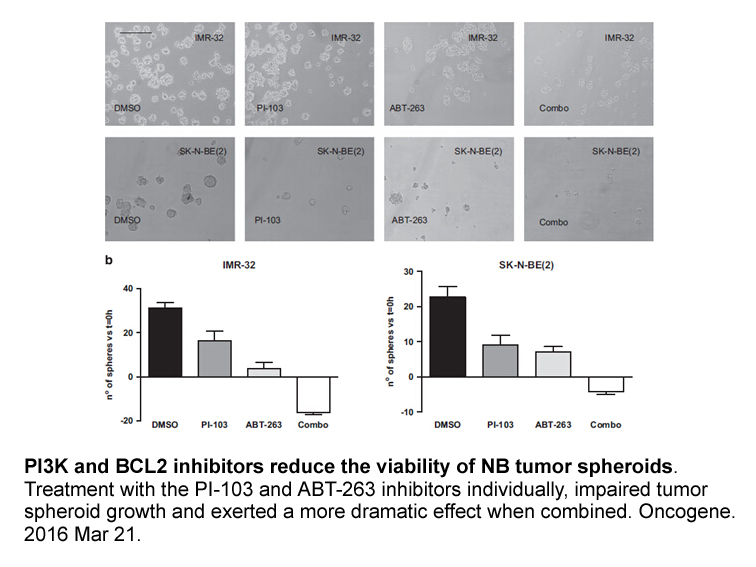
NOXA, a member of the pro-apoptotic B-cell lymphoma 2 (BCL-2) family, plays a vital role in regulating mitochondrial or inherent apoptotic pathways [7,8]. NOXA binds to MCL-1 with high affinity and interacts with A1 (known as BCL2A1), resulting in BIM release to trigger subsequent apoptosis [9]. In
MK-8776 Interestingly this situation might be changed by
2024-03-27
Interestingly, this situation might be changed by the immunological context, in particular by the cytokines encountered during differentiation or activation. LPS-activation of bone marrow-derived DCs differentiated in GM-CSF decreases autophagy, CP2, and subsequent activation of CD4+ T cells (Fig. 2
Based on the extracellular domain structures we can
2024-03-27
Based on the extracellular domain structures, we can infer that the dimer arrangement of GABAB receptor will undergo substantial changes upon receptor activation (Geng et al., 2013). First, agonist-stimulated closure of GABAB1 VFT would cause an upward rotation of its LB2 domain, coupled with an inw
br Materials and methods br Results RT PCR showed
2024-03-26
Materials and methods Results RT-PCR showed that both arginase 1 and 2 were expressed in the OB of Korean roe deer (Fig. 1). Immunoblotting detected arginase 1 in the OB of roe deer (Fig. 2A, left lane) at a molecular weight of approximately 37kDa, which is the size of the enzyme in the rat O
The isoelectric point of CL ARG was determined
2024-03-26
The isoelectric point of CL-ARG was determined by native IEF at a Enalapril Maleate gradient in the range (3–10) using standard protein markers with known isoelectric points. Native IEF reveals the presence of only one major band for CL-ARG with a slightly neutral-basic pI value of about 7.7. The c
In summary these data show that agonist exposure
2024-03-26
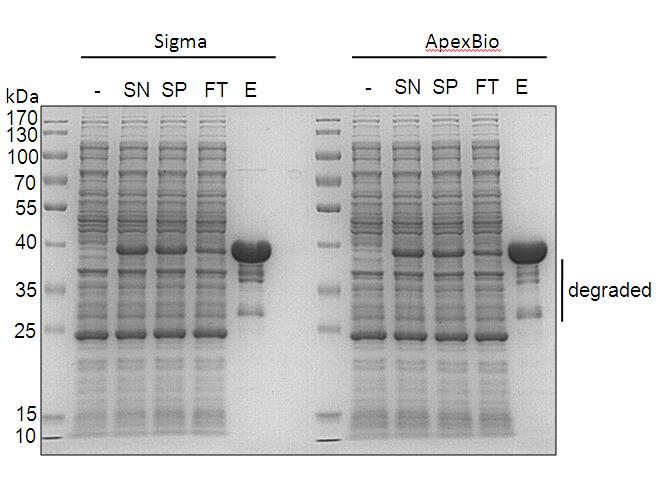
In summary, these data show that agonist exposure induces internalization and reduction in cell surface HA-mAPJ expression that occurs relatively rapidly during agonist exposure and recovers more slowly after agonist removal. Moreover the ppERK response of mAPJ-HEK293 cells to [Pyr1]apelin-13 desens
br Results br Discussion AP a
2024-03-26
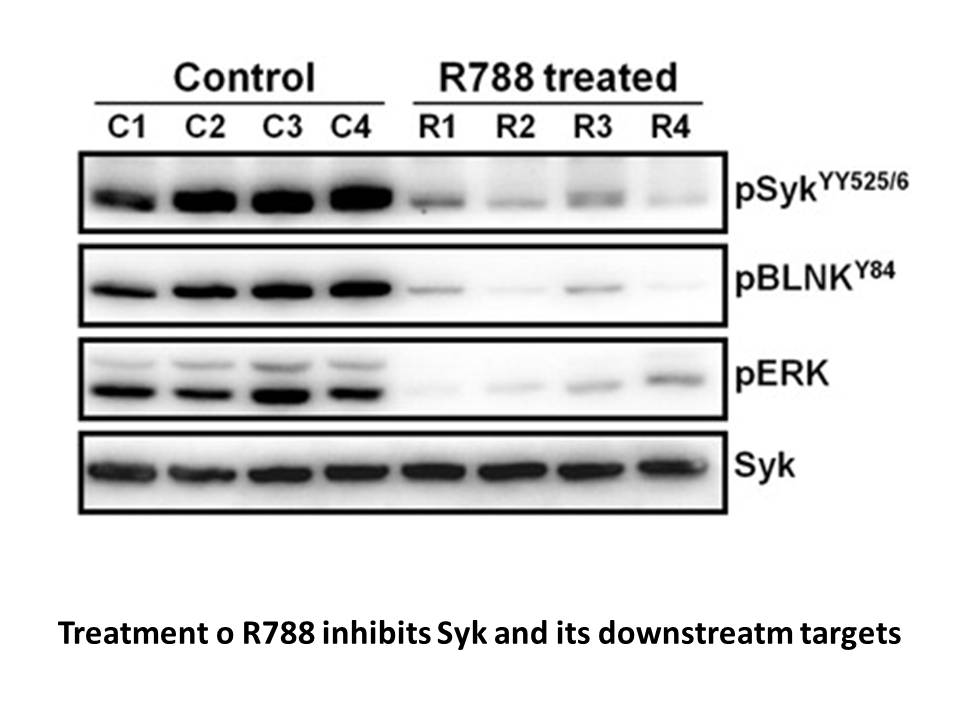
Results Discussion AP-1, a heterodimeric transcription factor comprising various combinations of FOS, JUN, MAF, ATF, and CREB family proteins, has been known to play a pivotal role in leukocyte development for decades (Liebermann et al., 1998; Valledor et al., 1998). However, its participation
br Angiogenesis as a critical event in diabetic retinopathy
2024-03-26
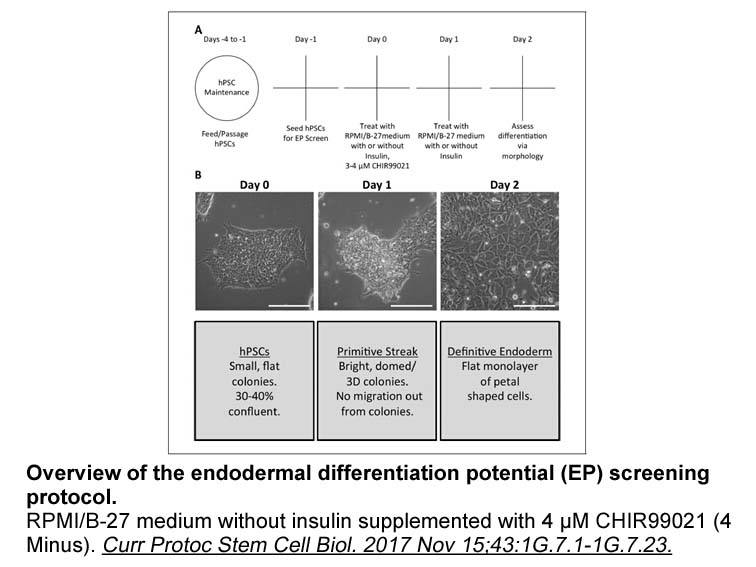
Angiogenesis as a critical event in diabetic retinopathy Angiogenesis refers to the abnormal proliferation of blood vessels during various pathological conditions. It acquires the stature of being one of the most detrimental events responsible for the progression of diabetic retinopathy. Angiogen
Use of RASB is associated with potential concerns
2024-03-26
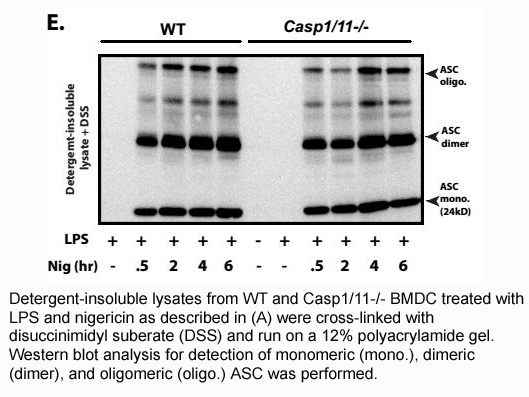
Use of RASB is associated with potential concerns about side effects such as acute kidney injury or hyperkalemia, and clinicians are reluctant to prescribe RASB in patients with severe renal dysfunction (estimated GFR Conclusions Conflict of interest Acknowledgement Introduction Renin-an
Recently Kamoshita et al evaluated a mouse
2024-03-26
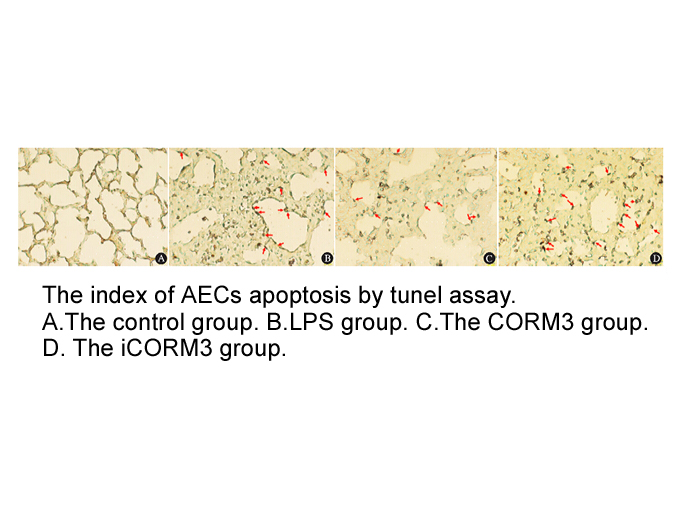
Recently, Kamoshita et al. (2016) evaluated a mouse model of retinal neuronal disturbance with the intraperitoneal injection of LPS and found that treatment with AICAR suppressed the reduction of conical function and decreased mRNA levels of TNF-α as well as improved mRNA levels of the mitochondrial
br Material and methods br Results Table
2024-03-26

Material and methods Results Table 1 shows that in addition to Leu/CysAP and DPPIV, genes for AspAP, ArgAP, MetAP, APM and PSA are expressed in adipocytes. The kinetic parameters of these AP are also shown in Table 1, revealing that APM has the highest Vmax and catalytic efficiency (Kcat/Km),
8474 records 205/565 page Previous Next First page 上5页 201202203204205 下5页 Last page